How to Detect AFib: Tests, Monitors, and At-Home Options



Atrial fibrillation (AFib) can be elusive and hard to detect. This common heart rhythm disorder doesn’t always announce itself—episodes can come and go (paroxysmal AFib) or occur without any noticeable symptoms at all (asymptomatic AFib). Because of this, AFib detection often requires the right tools at the right time to catch the irregular rhythm before it leads to potentially serious complications like stroke.1
Today, AFib can be detected through several methods: traditional in-clinic tests with a 12-lead EKG (electrocardiogram) machine, longer-term wearable medical monitors like a Holter, and innovative at-home EKG devices designed for everyday use.2 Let’s explore how AFib is detected—from the clinic to your living room—and how proactive monitoring can help you take charge of your heart health.
How Is AFib Detected?
Detecting atrial fibrillation may begin in a clinical setting, but not always. Many people first notice symptoms like dizziness, fatigue, or a fluttering heartbeat, prompting further evaluation. Here’s a breakdown of the main ways AFib is detected.
EKG/ECG
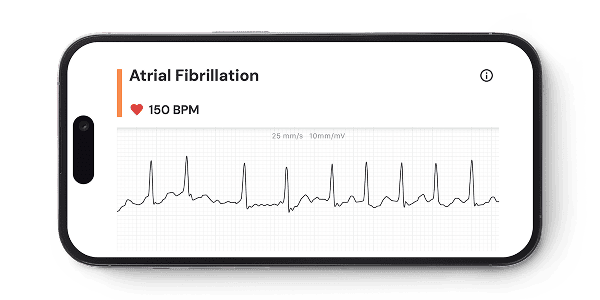
An electrocardiogram (EKG or ECG) is the definitive clinical test for diagnosing atrial fibrillation.3 It measures the heart’s electrical activity and can identify AFib’s signature irregularities, like erratic electrical impulses and irregular R-R intervals (as seen in the image above).4 However, a standard in-office EKG only captures a brief snapshot, just a few seconds of your heart’s rhythm.
So, can AFib be detected by an EKG? Yes, but only if the irregular rhythm occurs during the recording. If an AFib episode isn’t occurring during that time, it may go undetected. This is why many doctors may recommend long-term monitoring or at-home solutions, so you can catch AFib the moment you feel a symptom.
Doctor’s Visit
If you suspect you may be experiencing an arrhythmia, it’s time to set up an appointment. Your doctor will review your medical history, symptoms, and risk factors—such as high blood pressure or family history of arrhythmias. They’ll likely check your pulse and listen to your heart beat, looking for irregularities. While this exam can raise suspicion, confirming AFib typically requires an EKG.3 If AFib is not detected on an in-office EKG machine, you may be prescribed an ambulatory monitoring device or recommended an over-the-counter heart monitor.
Ambulatory Monitoring Devices
For patients whose AFib is occasional or hard to detect, doctors may prescribe longer-term wearable monitors (also called ambulatory monitoring devices):
- Holter Monitor: A portable device worn for 24–48 hours that continuously records your heart rhythm. It’s useful for short-term evaluation of suspected paroxysmal AFib.2
- Extended Holter Monitor:A small, patch-style device worn for up to 14 days that continuously records your heart rhythm. It offers longer monitoring than a standard Holter, improving the likelihood of detecting intermittent AFib episodes.
- Event Recorder or Monitor: Worn for up to 30 days, this device captures heart rhythm data either automatically or when you trigger it during symptoms like palpitations or dizziness.5
- Implantable Loop Recorder (ILR): Implanted under the skin for long-term monitoring—sometimes for years—used when symptoms are very infrequent.
Handheld, At-Home EKG Devices (KardiaMobile)
Modern technology now allows patients to extend AFib detection beyond the doctor’s office and prescription-only monitors. At-home EKG devices offer a way to record heart rhythm data whenever symptoms appear, bridging the gap between doctor’s visits and everyday life.
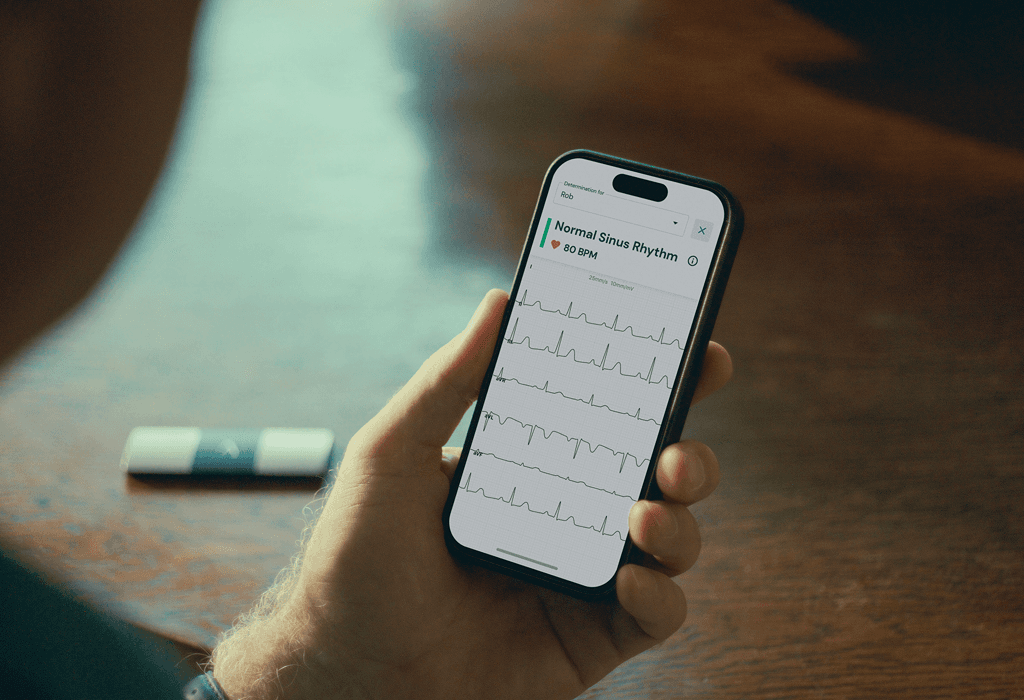
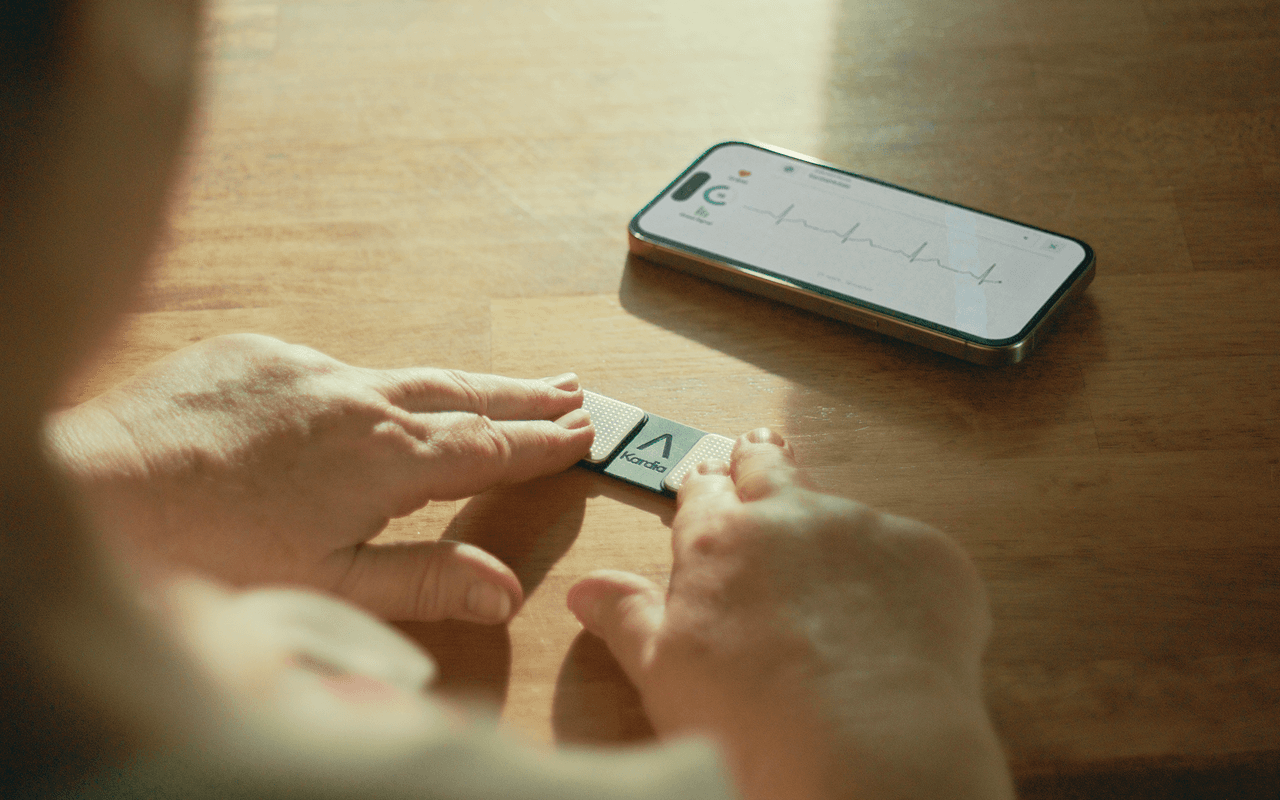
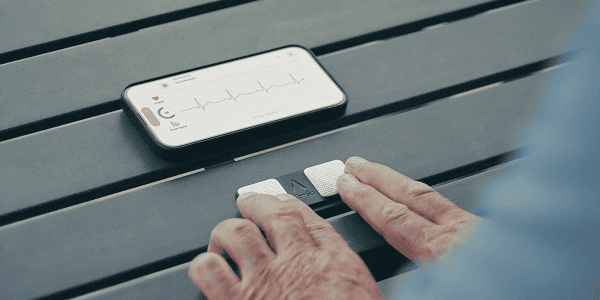
One of the most trusted tools for detecting AFib outside the clinic is KardiaMobile, an over-the-counter personal EKG device. Using it is simple: place your fingers on the device’s electrodes, and within 30 seconds, you’ll have a medical-grade EKG recording viewable on your phone or tablet.
This on-demand design means you can record your heart rhythm the moment you feel an irregular heartbeat, flutter, or any other symptom concerning you. The data can be shared instantly with your doctor, making it easier to capture intermittent AFib episodes that in-clinic tests might miss.
Does Kardia detect AFib? Yes. KardiaMobile is FDA-cleared to detect AFib, Bradycardia, and Tachycardia. It’s also clinically validated—studies show that handheld EKGs like KardiaMobile may detect more AFib cases than short-term Holter monitoring6, helping patients get timely care and treatment.
Learn more about Kardia personal EKG devices and how they fit into your proactive heart health routine.
Smartwatches and PPG (Photoplethysmography)
Some smartwatches use photoplethysmography (PPG)—a light-based sensor that measures changes in blood flow—to identify irregular pulse patterns. While helpful for screening, these sensors can be affected by motion, skin tone, or ambient light. They may provide useful alerts, but do not record the heart’s actual electrical activity.7 For clinical accuracy and physician review, EKG-based devices remain the gold standard for AFib detection.
Empowering Yourself with On-Demand Monitoring
Early AFib detection may reduce your risk of stroke and other heart-related complications.8 Clinical tests like 12-lead EKGs remain essential, but supplementing them with on-demand, at-home monitoring gives you the power to detect AFib when it happens—not just when you’re in the doctor’s office.
Talk to your healthcare provider if you suspect AFib or experience irregular heartbeats. Then, take the next step in proactive care with Kardia, the clinically validated suite of personal EKG devices that makes it easy to monitor your heart rhythm anytime, anywhere—helping you stay informed, connected, and in control of your heart health.
References
- 1. https://www.heart.org/en/health-topics/atrial-fibrillation/what-is-atrial-fibrillation-afib-or-af
- 2. https://www.heart.org/en/health-topics/atrial-fibrillation/treatment-and-prevention-of-atrial-fibrillation/afib-diagnosis
- 3. https://nyulangone.org/conditions/atrial-fibrillation-atrial-flutter/diagnosis
- 4. https://www.ncbi.nlm.nih.gov/books/NBK535439/
- 5. https://www.mayoclinic.org/diseases-conditions/atrial-fibrillation/diagnosis-treatment/drc-20350630
- 6. https://www.ahajournals.org/doi/10.1161/circ.138.suppl_1.10550
- 7. https://www.mdpi.com/1424-8220/25/9/2848
- 8. https://pubmed.ncbi.nlm.nih.gov/33837752/
Kardia personal EKGs do not check for heart attack and do not replace regular health checkups with your physician. Seek medical attention if you are experiencing any concerning symptoms or if you are having an emergency.